The Ultimate Group Escape Room Guide: How to Coordinate Your “Paranormal” or “Mummy” Mission in Carlton
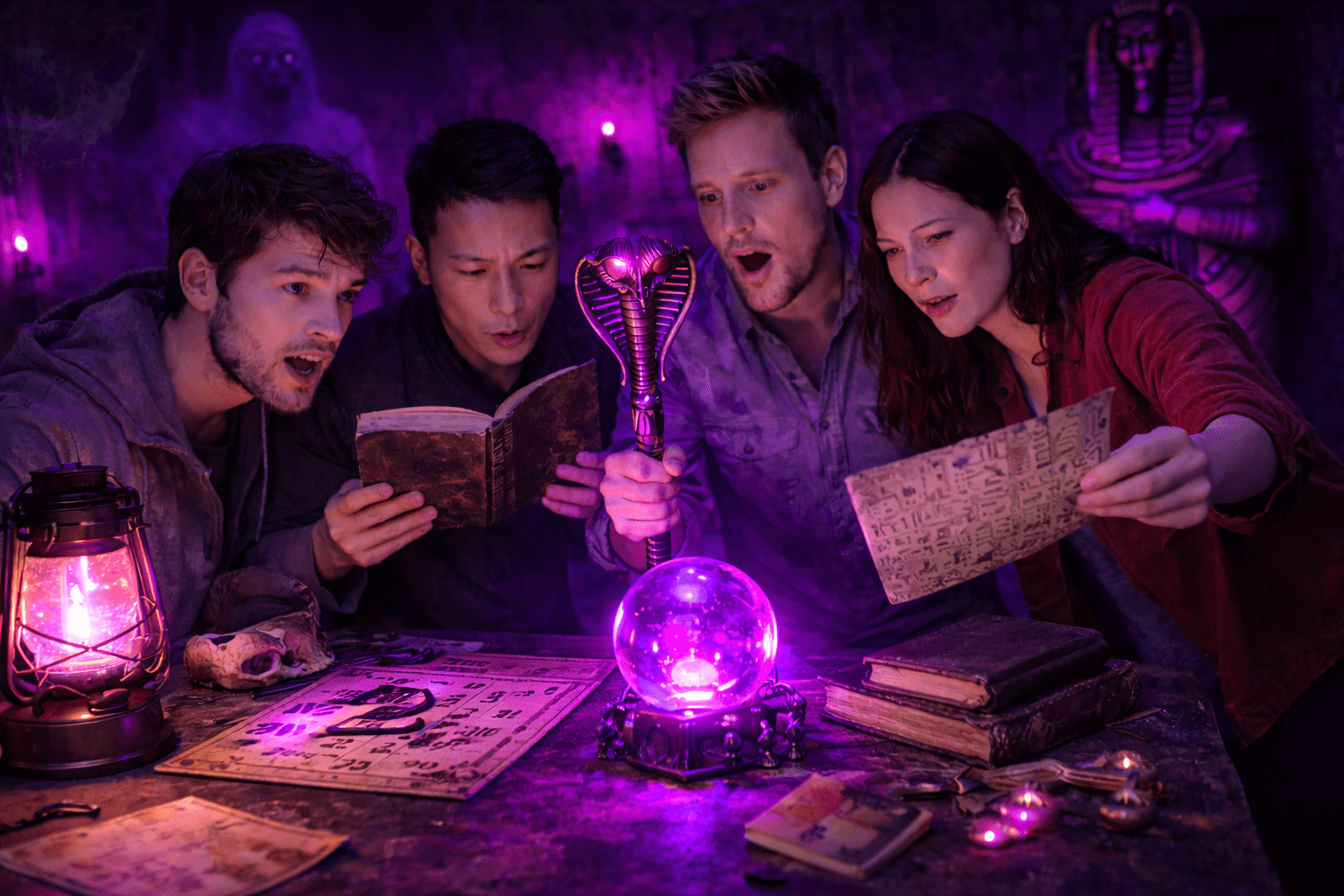
However, planning a group escape room experience in Carlton involves more than simply booking a time slot. When you’re working with eight or more people for a collaborative experience, a certain amount of structure and understanding can help a chaotic experience become a focused and memorable experience.
At Great Escape in Carlton, two large-format missions stand out for bigger groups: Paranormal and The Mummy. Each room is designed with layered puzzles and parallel task paths, making them particularly suited to team building and organised group play.
This guide explains how to prepare your team, how to divide responsibilities, and how to approach the experience with purpose.
Why Choose a Group Escape Room in Carlton?
Carlton sits just north of Melbourne’s CBD, within easy reach of universities, corporate offices, and inner-city suburbs. That makes it a practical meeting point for corporate teams, birthday groups, and social clubs looking for a structured activity.
A well-designed group escape room accommodates multiple thinkers at once. Rather than forcing everyone into a single puzzle stream, the layout allows smaller sub-teams to work simultaneously. This reduces bottlenecks and keeps engagement high.
Understanding the Paranormal Mission
Paranormal is built around investigative logic. The setting encourages observation and pattern recognition. It is generally best that teams start off by examining the room before attempting to solve the first visible puzzle.
When working in large groups, the key to success is to organise the group into three functional units:
- Search and discovery
- Puzzle assembly
- Information tracking
The discovery team is responsible for finding clues. The assembly team works through mechanical and logic-based components. The tracking role keeps notes on codes, symbols, and partial solutions. In high-pressure moments, this simple division prevents repeated mistakes.
A group escape room with a mystery theme rewards calm analysis over speed. Encourage clear verbal updates so that no clue remains isolated with one person.
Coordinating The Mummy Mission for Larger Groups
The Mummy is typically selected by larger social groups and corporate teams. Its physical layout supports parallel puzzle paths, which is why it works well as a team building escape room in Carlton.
If you have eight or more participants, begin with a short pre-game briefing among yourselves. Decide:
- Who will communicate with the game master?
- Who will monitor time
- Who will consolidate solved elements?
The Mummy benefits from distributed thinking. Several puzzles can be solved at once, but only if teams share information quickly. Encourage members to call out completed discoveries immediately. Silence slows momentum.
Preparing Your Team Before Arrival
Most coordination problems begin before the game starts. In order to avoid confusion:
- Arrive 15 minutes early
- Limit mobile phone use before arriving
- Appoint one spokesperson
For teams of corporate groups that are using a team building escape room to enhance teamwork, it would be advisable to conduct a reflection exercise.
Ask:
- What communication worked?
- Where did duplication occur?
- Who naturally assumed leadership?
These observations often reveal patterns that mirror workplace behaviour.
Strategies That Improve Group Performance
To be successful in a group escape room, it’s not about being a genius, but about the process.
1. Communicate Findings Immediately
Don’t keep the clues to yourself. Share your findings so that the other members can relate them to different puzzles.
2. Avoid Overcrowding
If three people are working on one lock, reassign someone elsewhere. Efficient use of space improves progress.
3. Keep a Central Clue Area
Used and unused items should be stored separately. Physical organisation helps to avoid repetition with the wrong combinations.
4. Request Hints Strategically
Timing is critical when playing “The Mummy” and “Paranormal”. If you take too long to ask a question, then your group might lose momentum. If you ask too soon, then there is the potential for removing the struggle of accomplishment. Assign one person to monitor this balance.
Why Escape Rooms Work for Team Building in Carlton
Carlton attracts university cohorts, startup teams, and established organisations. A team building escape room in this setting offers a controlled challenge without workplace hierarchy.
Because puzzles are logic-based rather than strength-based, participation remains inclusive. Introverted team members often contribute critical observations. Extroverted participants often drive coordination.
The combination creates a dynamic rarely replicated in meeting rooms.
A structured group escape room is not just entertainment. It is a compressed model of collaboration under time pressure.
After the Game: Capture and Reflect
Most groups appreciate post-game photographs. Collective effort can be seen through tangible means. These tangible items also signify the end of challenges and confirm that the group has completed its journey together and is now ready to begin reflecting on their experience.
For social groups, this is a shared memory. For corporate teams, it can become a reference point during later projects.
Consider discussing what worked immediately after exiting. Insights fade quickly once normal conversation resumes.
FAQs
1. What if we have 9 people for The Mummy?
The Mummy is designed for larger groups. Nine participants can usually be accommodated comfortably. The game structure supports parallel puzzle solving, allowing sub-teams to work simultaneously without overcrowding.
2. Do we get photos?
Yes, there is usually an offer of post-game group photos.
3. What is the trick to solving escape rooms?
You don’t need a secret code to solve an escape room; it’s more about working together and sharing what you’ve found and what you’re doing so that there’s no overlap between what you’re already doing or have found, etc.