6 Things That Actually Make Group Activities Work for Teams (Not Just Fill Time)
Most group efforts fail, not because the idea is bad, but because. The structure is why they fail. A team doing something together is not the same as a room full of co-workers doing something together. The difference is design: how an activity is designed, what it asks of participants, and whether it sets the stage for real collaboration.
Need ideas for your next offsite or team event? Here’s what makes a group experience memorable vs. one you forget by Monday.
1. Shared Stakes Change How People Engage
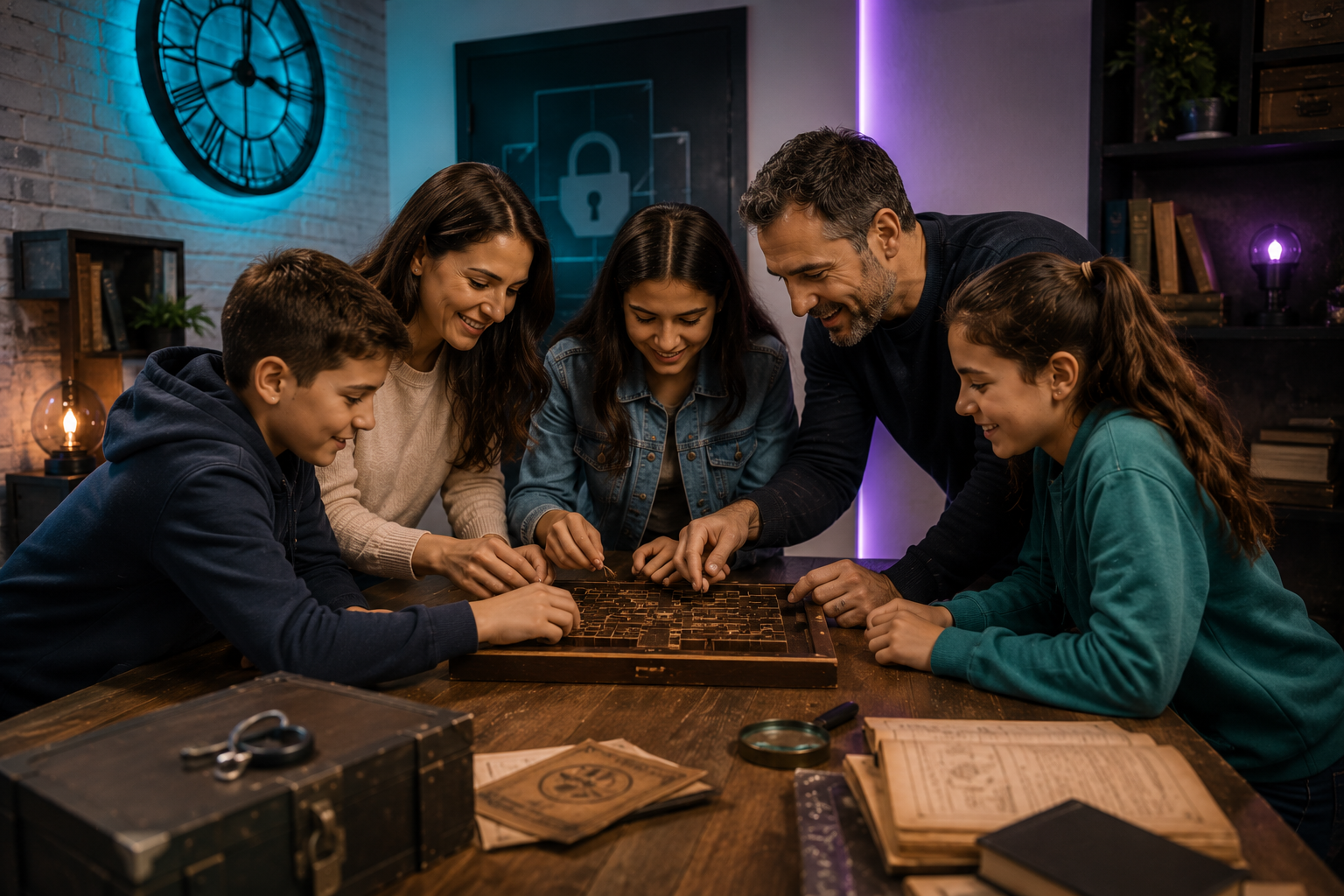
Activities where everyone wins or loses together shift individual behaviour quickly. When one person’s contribution affects the whole group’s outcome, participation stops feeling optional. A well-designed corporate team building escape room does exactly this, the room doesn’t care about hierarchy, and neither does the clock.
In this structure, quieter team members often surface ideas that louder ones miss. That dynamic is harder to manufacture in a boardroom.
2. Complexity Has to Be Distributed
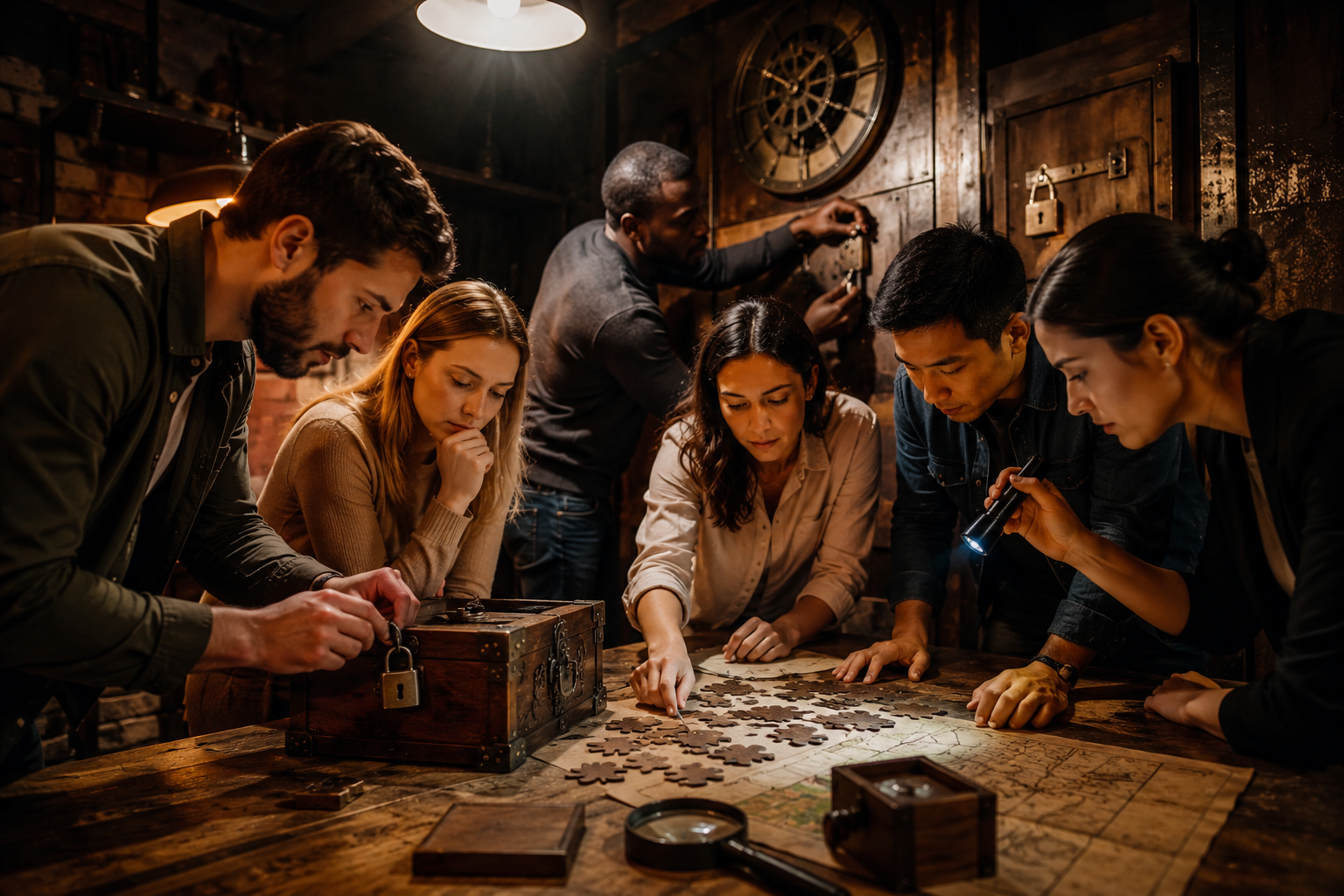
One of the defining markers of a strong group format is that no single person can carry it. A big group escape room is built so puzzles branch into different areas and types of skills. It can’t be done by one person no matter how good he is.
That’s important for teams because it’s real work conditions. Projects fail when load isn’t shared. Activities that force distributed effort make that reality tangible, and often reveal where a team’s coordination gaps actually sit.
3. Time Pressure Accelerates Honest Behaviour
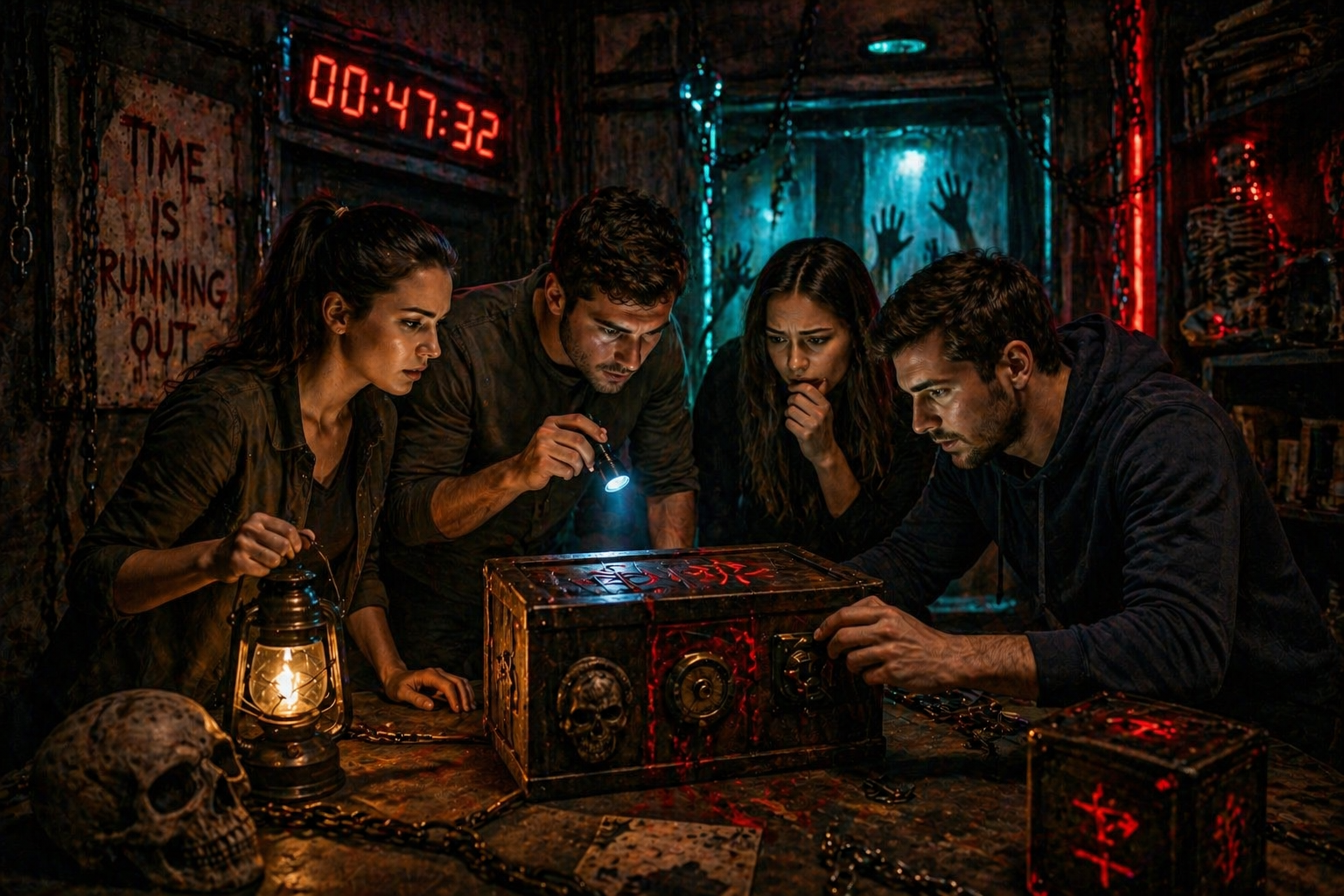
Comfortable settings let people default to their social persona. Add a time constraint and that changes. A corporate team building escape room introduces low-stakes urgency that tends to surface how people actually communicate under pressure, who takes charge, who defers, who generates ideas quickly, and who needs clarity before acting.
None of that is a criticism. It’s information. And it’s far more useful than a survey.
4. Physical Space Matters More Than Most Planners Realise
Generic venues produce generic outcomes. So when an activity is connected to a designed environment carefully built to reward attention to detail and spatial reasoning, the experience gets texture. Participants are not simply completing tasks, but instead are making sense of an environment.
The best formats use space as part of the challenge. A well-constructed big group escape room doesn’t just host the activity, it is the activity. The design itself communicates, misdirects, and rewards.
5. The Debrief Is Where the Learning Lands
An activity without reflection is entertainment. If the goal is team development, what happens after the room matters as much as what happens inside it. What worked? What didn’t? Who emerged in unexpected ways?
Teams that take even ten minutes to discuss this leave with something durable. Operators who build that debrief into the format understand what they’re actually providing.
6. Size Has to Be Designed For, Not Accommodated
Larger teams create a specific risk: passengers. If the format doesn’t account for group size, some people will drift to the edges and disengage entirely. A purpose-built big group escape room structures participation so that size becomes an asset rather than a management problem. The multiple simultaneous challenges, the coordinated objectives, and the clear roles mean the group doesn’t split into spectators and players.
This distinction is particularly important for corporate teams, as it separates a genuinely useful experience from a box-ticking one.
FAQs
1. What makes a group activity effective for teams?
Effective activities build shared stakes, require distributed effort, and reveal real communication patterns, not just entertainment, but structured conditions that show and strengthen how a team actually works.
2. Why do some team activities feel awkward or unproductive?
Most feel forced because they lack genuine challenge or distributed roles. When individuals can disengage without consequence, the activity stops functioning as a team experience and becomes a social obligation.
3. What types of activities help teams connect better?
Activities with time pressure, interdependent tasks, and purposeful design, like a corporate team building escape room, tend to create authentic connection because they require real-time collaboration, not performed participation.